


Happy November! After a rare skipped week, I’m excited to be back with a slight sugar rush from all the candy I stole from my kids. This issue has a blues track you gotta hear, a cab rec that came out of a last-minute gig, and tips from that show that I think will help you as well. In the links, there’s Greg Koch giving us lots of knowledge, a Randy Rhoads lost guitar lesson, Robben Ford and Oz Noy live, a chat with Robert Keeley on 25 years of pedals and much more. Let’s jump into this week’s issue!
🔊 Turn This Up
This week’s rec is “Bad Like Me” from Christone “Kingfish” Ingram’s Hard Road. The album just got an Extended release this month with some extra tracks, but I keep coming back to this one.
Start with the reverb on Ingram’s voice. It makes an already powerful voice sound huge and gives the whole track a big, roomy feel. Then there’s the lead playing, which is a blast. It’s very vocal and angular, with quick stabs that answer his vocal lines, and a full solo with a few phrases I want to steal for myself.
I’m a recording and mixing nerd as much as a guitar guy, so I went digging through the credits. Nick Goldston produced and co-wrote the track, and he gives it a modern, break-beat flavored groove under all that guitar. It’s a nice change from the usual 12-bar blues setup.
Bonus for the studio nerds: another track on the album, “Nothin’ But Your Love,” was cut at Royal Studios in Memphis. Royal started life as a movie theater, and the floor still has the theater slope. Go listen to that one too, because it’s a slow Prince-style song that shows off a totally different side of Kingfish.
If you love blues, give the whole album a spin. Kingfish is a breath of fresh air in the genre, and I can’t wait to hear where he goes next. And if you like the album version of “Bad Like Me,” there are plenty of great live versions with Ingram on his signature Telecaster.
Hit reply and tell me your favorite Kingfish tune. I’m always looking for the next one to dig into.
✨ Gear Rec Featuring the Laney LFR-212
When I got called to jump on a gig on short notice, I knew I didn’t want to haul my usual half stack, a Mesa Boogie Mark series head into a 1960A cab. I’ve been deep in the world of plugins, my Fractal FM3, and more recently the Neural DSP Quad Cortex Mini, so I built my whole rig on the QC Mini with four scenes: a rhythm tone, a lead tone with delay, a harmonized tone, and an octaver I needed for a cover song.
All of it went straight from the QC Mini into a Laney LFR-212, and that’s my recommendation this week. If you’re looking for a full range, flat response (FRFR) speaker for your modeler, check it out, or look at the 1x12 version. I wanted all the low end I could get, so I went with the 2x12. It’s flat enough to let your modeler come through, but it feels like a real guitar cabinet and not a PA speaker. It has a combo XLR and 1/4” input, a simple volume knob, a high frequency trim you can adjust for the room, and a DI out if you’re going into a mixing board or interface. It costs more than some of the options from Fender and others at a little over a thousand dollars, but the construction and tone justify it.
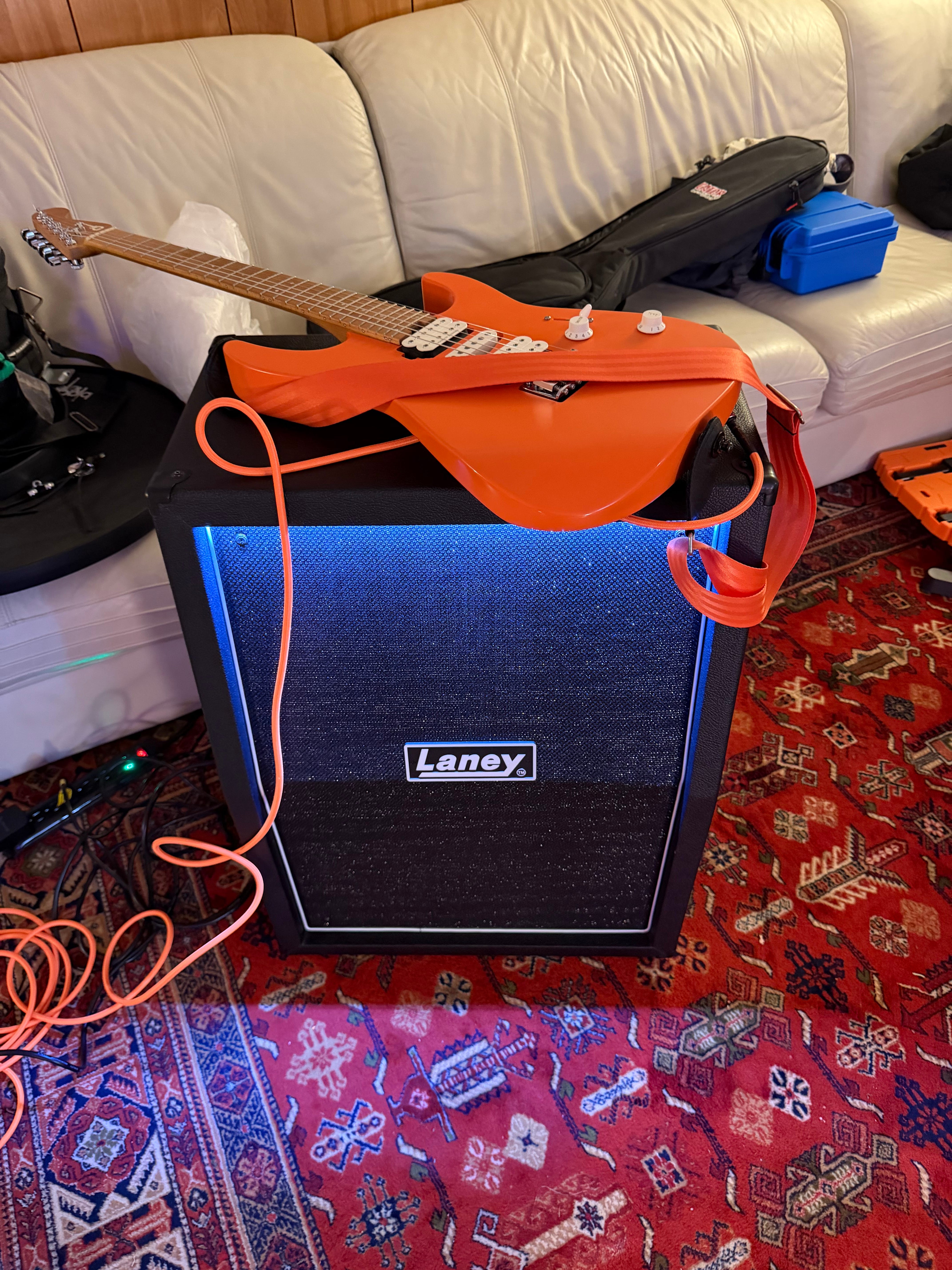
I have a few gripes, but they’re all manageable. First, I picked the 2x12 for low end and got more than I bargained for, so I trimmed the bass in my amp block to compensate. Second, it’s heavy. It’s still a lot easier than my half stack, but I’m going to look into a cart or casters. Third, it doesn’t come with a cover. I bought a simple one from LeCover to protect it, but at this price it would be nice if Laney threw one in. One thing I loved is the light option that illuminates the front of the cab, which was a great feature to have on the gig.
Are you using a FRFR speaker with your modeler? If so, which one did you pick and why do you like it? Would love to feature more readers’ rigs in upcoming issues of the newsletter.
🎸 The Smart Guitarist
Last issue, I said I’d follow up if I picked up any more tips on playing live and learning a lot of music in a short amount of time. I did. If you missed that issue, go back and read it first. It’s packed with ways to get a lot of music into your head when time is tight.
Knowing the songs in your practice space and playing them on a stage are two different things. When I was gigging two or three nights a week back in the day, that transition was a lot easier, you almost didn’t need to practice at all. After a long break from playing out, it opened right back up. Here’s some tips that I think are helpful.
No matter how much you practice at home, you can’t account for the front of house and monitor engineer, who are often the same person and might be running the lights too. Thankfully, we had a fantastic engineer who got us a good FOH mix and, more importantly, a great monitor mix, so everyone could hear what they were doing. Bad monitoring is a nightmare when you can’t hear yourself properly. Pro tip: introduce yourself to the engineer before the show, and be friendly!
You can’t plan for the unimaginable. Case in point: a band earlier in the night had a drummer with a ton of cymbals all over the drum riser, and one of them fell off and cut the bass player’s instrument cable clean in half. I’ve played and gone to countless shows, and I’ve never seen that happen. Always bring backups: strings, cables, guitars, all of it.
This one could have fit in last issue, but try jumping into songs from different points when you practice, not just from the beginning. Mistakes are bound to happen at any show. If you can quickly hear where you are in the song and get back on track, most of the time the audience won’t be able to tell.
Find the balance between being in the moment and playing the songs right. This goes hand in hand with the tip above. Every song has parts you can run on autopilot and parts that need your full attention. Ever been in the middle of a verse and wondered if it’s the third time through or the fourth? Vocal cues usually help, but you want to know at a moment’s notice where you are in the song and where you’re headed next. Have fun, but keep one ear always listening to what’s coming up.
Playing live is what all the practice leads up to, whether it’s with your full band or by yourself in your room running the songs. Have as much fun as you can, support other bands, and build great relationships. Being in music is a blessing, and I wouldn’t have it any other way.
🔗 This Week’s Guitar Links
I spent most of my time this week on my own writing and lessons, so there’s no commentary on the links. But I’m really excited about this batch, because I had two weeks of links to share, so there are 25 of them! Chase Maddox analyzed 578 jazz phrases and found arpeggios came in fifth, Josh Meader melts some guitar minds, and Jack Gardiner breaks down the five riffs that made him. And since I just talked about my Mesa half stack, I had to include the vid on every John Petrucci Mesa rig over 40 years - when Petrucci walks into the room, his reaction is hilarious. Regular notes on the links are back next week. For now, dive in, and let me know what you think or if I missed anything.
I Analyzed 578 Jazz Phrases. Arpeggios Came in 5th
Bedroom Guitarist? How To Sound Like A PRO
The Randy Rhoads Lost Guitar Lessons
Give Me 11 Minutes and You’ll Never Feel Lost On The Fretboard Again
Eric Gales on gospel voicings, keyboard chords & the mode he could play all day
One Lick in 5 Pentatonic Positions - Master the Entire Fretboard!
Week One | Play Triplets Perfectly Every Time with Sean McGowan | Acoustic Guitar Workout
This Triad Approach Will Transform Your Lead AND Rhythm Guitar Playing. Period
EVERY John Petrucci Mesa/Boogie Rig Explained: 40 Years of Past-to-present Power
Blues Soloing Isn’t Hard, It’s Just Misunderstood
5 Things That Make You Sound Like a Pro Guitarist
Plini - “After Everything” (Live)
I Practiced Jazz Guitar for Just 30 Minutes a Day. Here’s What Happened
Learn 7 Guitar Concepts in 7 Minutes (Instant Level Up)
Josh Meader Melts Our Guitar Minds [Plus Trio Band Performances!]
Oz Noy & Robben Ford – “Flashback” | Live at The Iridium
Practice Triads EVERY DAY Like THIS to SKYROCKET Your Playing
Steve Lukather — Add A Little Jazz to Your Rock Guitar
The LAST Pentatonic Lesson You’ll EVER Need
5 Guitar Habits That Separate AMATEURS From PROS
Jack Gardiner’s 5 riffs that made him: Hendrix, Yngwie, Paul Gilbert and more
Greg Koch - Brewers Champions, New Release Day, Since I’ve Been
Starting songs from random spots is the tip I'd underline. Knowing where you are is what saves you when something goes sideways on stage, and home run-throughs from the top rarely build that. Glad the first gig back went well.
I've seen a cymbal cut a member of the audience after they threw a full beer bottle at the drummer.... but not a cable lol.