

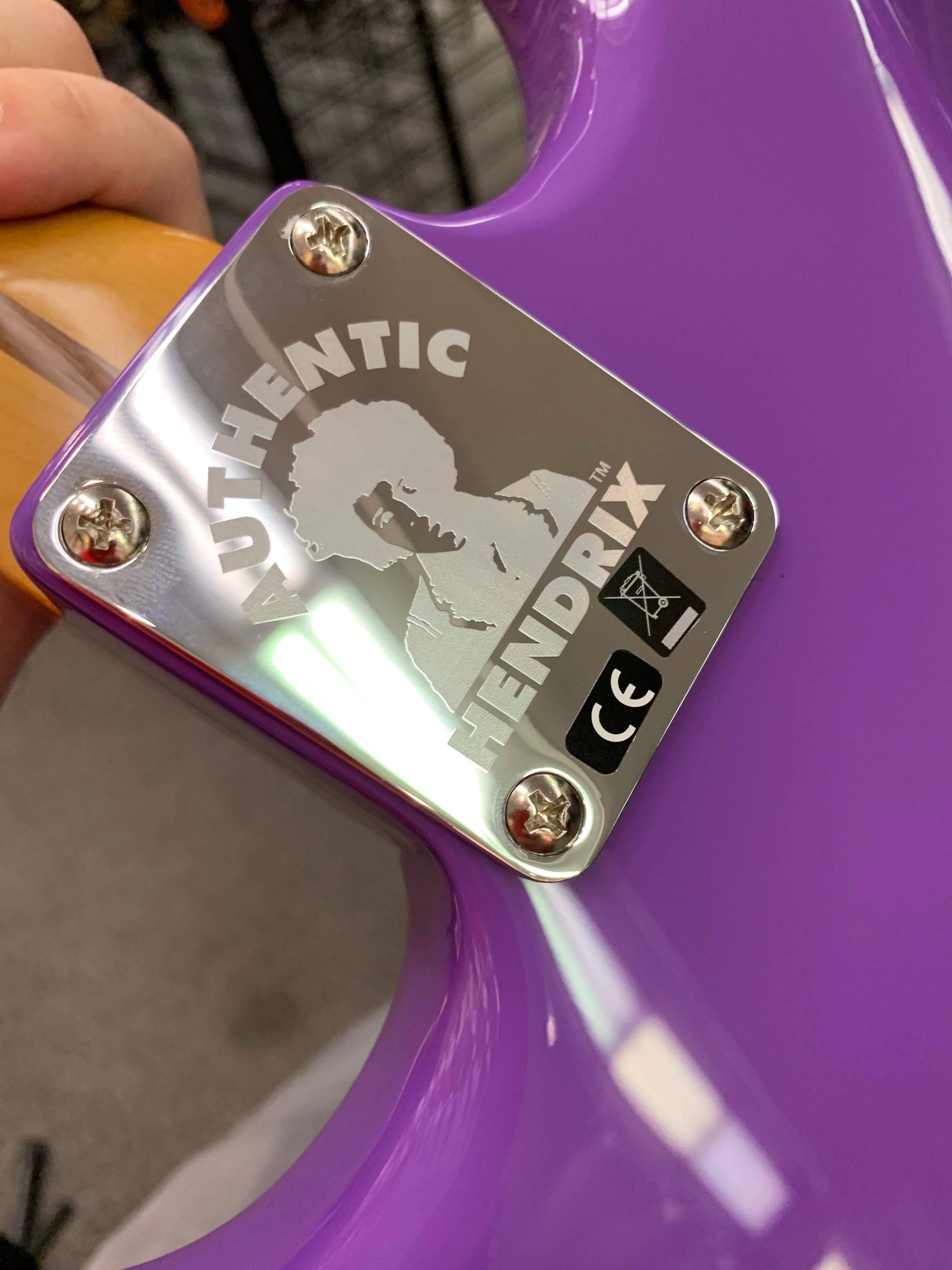
This week I’m digging into one of my favorite Hendrix tracks that doesn’t get nearly enough love, and all the crazy things Jimi had to deal with while making it, breaking down major triads in a way that’ll actually make them click instead of just another shape to memorize, and rounding up a great set of guitar links: sheet music basics, a full technique workout, phrasing tips from Ross Campbell, Oz Noy on playing with color, the Edge’s guitar sound ahead of U2’s new album, and a few more. Plus, I want to hear what you’re curious to dig into next, so scroll down to the Question of the Week and hit reply.
🔊 Turn This Up
Brad Tolinski had a line in his Substack recently that made me kind of sad - nobody really talks about Hendrix the way they used to. He’s still the name everyone throws out as the greatest of all time, especially for all his innovations with electric guitar, but we’re talking about him less year after year. And yeah, I understand how ridiculous it is for me to “recommend” Jimi Hendrix in a guitar newsletter. That’s like a hockey newsletter running a story on this Wayne Gretzky guy you should really check out. But there’s so much fun Hendrix material that you might have missed. Things that aren’t “Purple Haze”, “All Along the Watchtower” and “Hey Joe”.
Here’s a semi-hot take - I love later Hendrix even more than early Hendrix. Everybody consistently talks about all the early albums, but the 1969-1970 stuff has this space-blues thing happening that I’ve always loved - I think I enjoy it so much because it sounded like Jimi was experimenting more than ever. “Room Full of Mirrors” is a perfect example and one of my favorite Hendrix songs. I love the layered, delayed guitar at the beginning. When the song really kicks in, the guitar sounds like it’s actually bouncing around the room. I remember going to the Rock and Roll Hall of Fame when I was younger and listening to this song and many other Hendrix songs on my headphones. It was a blast, and made 16 year old me an instant fan.
What I also dug is how Hendrix weaves his guitar licks really nicely in between his vocals, and then takes a fun solo midway through. He closes out the song doing a very Hendrix-y thing, playing the same notes as his vocal lines. Side note, was Blue Oyster Cult influenced by the level of the cowbell in this song?
Speaking of production, the whole story of how this song got made reads like a lost chapter out of a Mixerman book. The session where they laid down the drums, back in November ‘69, got derailed twice. Hendrix couldn’t hear himself in his headphones, then his amp cut out mid-take, forcing them to call in a young engineer named Tony Bongiovi to save it (fun trivia: he is in fact related to Jon Bon Jovi). Almost a year later, when Hendrix finally sat down to mix the thing himself, the session opened with the tape machine getting wonky. This song fought him for years. And ultimately it’s so sad that just as Electric Lady was finally finished, giving him the studio he’d always dreamed of, Hendrix would be dead about a month later. In some ways, that’s what makes it feel like he was just getting started rather than winding down. (Most of this comes from Hendrix’s own jimihendrix.com, which has a ton of great info if you want to go down the rabbit hole.)
I just started reading Experienced: On the Road with Jimi Hendrix and Beyond, the new memoir from Eric Barrett, Hendrix’s road manager from 1968 to 1970, which is the window where this song was getting made. I’ll report back once I’m further in, but it already feels like a different angle of Hendrix than we’ve read about before.
✨ Question of the Week
I’ve asked some version of this before, but it’s worth revisiting since it’s one of the ways I figure out what to write about next. What’s something you’re curious to finally dig into, or a technique, lick, piece of theory, or even a recording/mixing question that’s never quite clicked for you? Just hit reply and let me know what’s on your mind!
🎸 The Smart Guitarist
Let’s talk about major triads (don’t roll your eyes just yet, I know we talk about them a bunch, but they’re super important!). You probably know a few shapes without thinking twice, but can you name the three notes in a Bb major triad on the middle strings without looking at your hand first? A triad is just the root, the third, and the fifth. Once those three notes are locked in, you should be able to find them anywhere on the neck, not just the one shape you’ve had memorized for years.
This isn’t one teacher’s lesson either, many guitar teachers have talked about the concept, but I wanted to spotlight a video from Andrea Tonelli linked below (first time I’m sharing his stuff) that has a smart take: instead of drilling shapes on their own, learn the I, IV, and V triads of a key together, say C, F, and G in the key of C, and practice moving through their inversions as a group. Do that and you’ve basically covered most of the chords in that key without ever treating it like a boring memorization exercise. The reason you keep hearing about triads from so many different corners of the guitar world isn’t a coincidence, they’re one of the most important things you can know, and they’ll transform your rhythm and lead playing.
Here’s something you can work on this week. Take that I-IV-V group in one key and map out every inversion you can find on the neck, then grab a pencil and paper and write them out too: string by string, and then start filling in the key’s other notes as well. The idea is to see how many chords are close to each other, and also to pinpoint those important triad notes when soloing/voice leading. Writing it down forces your brain to actually process the notes instead of letting your fingers run on muscle/shape memory. Give it a week and you’ll start seeing triads everywhere on the neck instead of the same three or four spots you always reach for.
Is this the kind of thing you like digging into and want more of? Let me know.
🔗 This Week’s Guitar Links
Learn Triads by Key, Not by Shape — This Changes Everything - This is the video I mentioned above in Smart Guitarist, and it’s all about learning triads across the whole neck. The concept is simple: take the 1, 4, and 5 of a key, play the I chord in root position, then play the IV and V using first and second inversions. The shapes end up surprisingly close together. From there he moves into the three minor chord shapes in the key, leaving just the one diminished shape to learn later on. Learning these shapes all over the neck opens up a ton of interesting chord progressions you might not have thought about before. I’ve been dipping into this older lesson from Acoustic Guitar where Grant Gordy talks about triad mapping through a different lens. I also really enjoyed this video from Daniel Weiss where he talks about voice leading. Combine all three and you’ll have tons to work on.
Sheet Music Crash Course: Everything You Need to Know - If you’re interested in learning to read notes, rather than just tab, check out this video from Brad Harrison called Sheet Music Crash Course. It’s one of the clearest explanations I’ve seen of the major things you need to know about reading notes on a staff. I love the cartoon-y, almost CGP Grey style the video is laid out in, and even as someone who already reads sheet music, I found myself watching the whole thing. The video’s sponsor, Sight Reading Factory, a site that generates fresh sheet music for you to practice with, is also something I’m planning to check out myself.
The Only TECHNIQUE Workout You’ll Ever Need (Master EVERYTHING) - Fun video from Bradley Hall that focuses on five techniques - alternate picking, sweep picking, legato, tapping, and economy picking, each one building from basic patterns up to tougher exercises, all with tab. The picking section covers speed and string crossing, sweeping gets into arpeggio shapes and position shifts, legato is your hammer-ons and pull-offs, tapping goes from single notes to multi-finger patterns, and economy picking blends alternate and sweep picking to close it out. If you’re stuck on what to practice, and want good technique ideas, this is an easy video to pull from.
3 Phrasing Exercises To 10X Your Soloing - Speaking of technique, Ross Campbell just announced a new course focused on phrasing. If you want a preview of what it covers, check out his latest video. It walks through call and response, playing around with your timing, and a solid exercise for building motifs and developing them into something bigger. What I love is that the whole focus isn’t new licks, it’s taking the ideas you already have and making them way more expressive through phrasing.
Oz Noy Guitar Masterclass | How to Improvise & Playing with Colors - It’s all about the colors, mannnn. Oz Noy is such a tasteful guitarist, and I’ve learned a ton from him over the years. He did a masterclass for Stages Music Arts, and this snippet focuses on how almost any note can “work” depending on the harmony, even if it sounds dissonant at first. It’s a quick clip, but the ideas he gives on scales and how licks resolve are worth thinking about. I hope we get more clips from this masterclass.
The Edge’s Sound Without the Edge’s Rig: Amps, Delay, Drive & Pick Tricks - U2 just announced their new album, Carnaval de Luz, out November 13th, their first record of new music in nine years. I’ve always loved The Edge’s guitar parts, probably because I’m such a sucker for effects pedals, but also because of how he can make something sound so massive out of a few notes or sparse chords. One of the very first posts I ever ran on Chasing Sound spotlighted him. Premier Guitar teamed up with Eventide and Tom Butwin to break down how you can get that U2 sound without needing his exact rig.
Even more great videos to check out:
40 Years Later THIS Is Still The Best Picking Lick You Will Ever Learn - I’m so glad Robert Baker is back to playing guitar and making courses after working through a hand injury. His latest video is a fun picking exercise based on one of the coolest licks from the movie Crossroads. Learn the lick, and if you haven’t seen Ralph Macchio go up against Steve Vai as the devil’s guitarist, you need to watch this movie!
How To Use a Whammy Like Jonny Greenwood of Radiohead | Potent Pairings - The Whammy is one of my favorite weird guitar effects, and I’ve used it to mangle my guitar sound plenty of times, especially when it gets into that two-octaves-up realm where you start sounding like an alien. I loved this video from Reverb where they show you how to play three different Jonny Greenwood Radiohead riffs that use the pedal.
The Captain Meets Phil X! - We talked about a relative of Bon Jovi’s while talking about Hendrix, so now let’s talk about Phil X, who currently plays guitar in the band. He sat down with the Captain over at Andertons, and the two covered everything from his signature gear to how his role and influence in Bon Jovi have changed over the years, plus his thoughts on YouTube and more.
I Interviewed the CEO of Fender - I’m putting this at the end of the newsletter intentionally (you know I care way more about learning guitar than the gear itself), but I thought it was newsworthy that Mary Spender had Fender’s CEO, Bud Cole, on her channel to talk about, well….everything going on with them lately. I’ll let you make your own call on what he said. In related news, it’s exciting that PRS came out with 8 new colorways for the PRS and SE Silver Sky models, in collaboration with Land Rover of all people. Definitely didn’t have that on my bingo card, and I think it’s kind of funny that these guitars have Defender branding on the backplate.
Hendrix disappeared because his estate was so aggressive about keeping his music off of youtube and streaming. They seem to have eased up, but the damage is done. A whole generation missed out on him.